
For years, intermittent fasting was almost synonymous with one approach: the 16:8 method. The formula was simple. Fast for 16 hours and consume all meals within an 8-hour eating window.
Millions adopted the strategy because it appeared easier than counting calories. Celebrities promoted it. Fitness influencers embraced it. Researchers studied it extensively.
But by 2026, the science has evolved.
A growing body of research suggests that the future of intermittent fasting may not be about fasting longer. Instead, it may be about eating smarter, aligning meals with circadian rhythms, and choosing sustainable eating windows that people can actually maintain over the long term. Recent studies increasingly focus on flexible schedules such as 14:10, 12:12, and early time-restricted eating rather than extreme fasting protocols.
The result is a major shift in how health experts think about fasting.
From Intermittent Fasting to Time-Restricted Eating
One of the biggest developments in nutrition research is the growing preference for the term “time-restricted eating” (TRE).
Unlike traditional diets, TRE focuses on when people eat rather than what they eat. Most protocols involve consuming meals within a 6- to 10-hour window followed by a fasting period of 14 to 18 hours. Researchers believe this timing may help align eating patterns with the body’s natural circadian rhythm.
This distinction matters.
Scientists increasingly believe many of the benefits attributed to fasting may actually come from improved meal timing, reduced late-night eating, and better alignment with the body’s internal clock rather than fasting itself.
What the Largest Reviews Now Show
The strongest evidence comes from large systematic reviews published over the past two years.
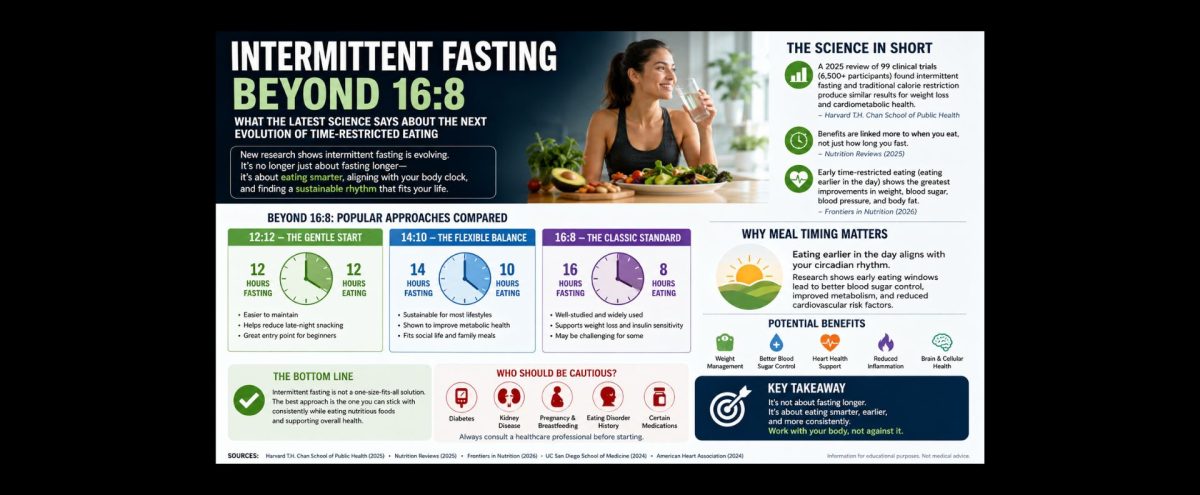
A 2025 review examining 99 clinical trials involving more than 6,500 participants found that intermittent fasting and traditional calorie-restricted diets produced similar results for weight loss and cardiometabolic health. Neither approach clearly outperformed the other.
Another major review found intermittent fasting diets generally provide benefits comparable to conventional calorie reduction programs, particularly for body weight, blood pressure, insulin sensitivity, and cholesterol levels.
This is one of the most important findings in modern nutrition research.
Intermittent fasting is not necessarily superior to other weight-loss approaches.
However, it can be easier for some people to follow because it simplifies decision-making and reduces the need for constant calorie tracking.
Why 14:10 Is Becoming More Popular
The emerging trend among researchers is a move toward more moderate fasting schedules.
The 14:10 approach allows a 14-hour fasting period and a 10-hour eating window. Many nutrition experts view this as more sustainable than 16:8 while still providing meaningful metabolic benefits.
A clinical study involving adults with metabolic syndrome found that restricting eating to a 10-hour window improved several markers of heart and metabolic health. Participants experienced measurable improvements despite not following extreme fasting protocols.
For many people, a 10-hour eating window simply fits real life better.
Instead of skipping breakfast or avoiding dinner with family, individuals can maintain a schedule that supports both health goals and social activities.
That combination often improves long-term adherence.
The Rise of the 12:12 Approach
Perhaps the most surprising trend is the growing interest in 12:12 fasting.
This approach involves fasting for 12 hours and eating within a 12-hour window.
At first glance, it may not seem like fasting at all.
However, researchers note that many Americans consume calories over a 14- to 16-hour period each day. Simply reducing eating to a 12-hour window can eliminate late-night snacking, improve meal consistency, and better synchronize eating patterns with circadian biology.
For beginners, 12:12 offers a gentle entry point without the hunger and lifestyle disruption often associated with stricter protocols.
Many experts now view it as a practical first step rather than immediately jumping into 16:8 or more aggressive fasting schedules.
Early Eating May Matter More Than Long Fasting
One of the most significant findings from recent research involves meal timing.
A large 2026 analysis found that early time-restricted eating produced some of the strongest improvements in body weight, waist circumference, body fat, fasting glucose, insulin levels, and blood pressure.
Researchers increasingly suspect that eating earlier in the day may provide greater benefits than simply extending fasting duration.
The theory is rooted in circadian biology.
Human metabolism tends to function more efficiently during daylight hours. Blood sugar control, insulin sensitivity, and digestive processes often perform better earlier in the day than late at night.
This may explain why some experts now recommend finishing dinner earlier rather than simply fasting longer.
The Weight-Loss Reality Check
One reason intermittent fasting remains popular is its reputation as a weight-loss miracle.
The latest evidence suggests a more balanced perspective.
A major 2026 review found that intermittent fasting produced weight loss results comparable to conventional dieting but not dramatically better. Researchers concluded that fasting should be viewed as one option among many rather than a superior solution.
For most people, weight loss still comes down to a familiar principle:
Calories consumed versus calories expended.
Intermittent fasting may help create a calorie deficit by naturally reducing eating opportunities, but it does not bypass basic energy balance.
The good news is that many people find fasting easier to maintain than traditional calorie counting.
And adherence often determines long-term success more than the specific diet itself.
Potential Benefits Beyond Weight Loss
Researchers continue to investigate other possible health benefits.
Studies have associated intermittent fasting with improvements in:
- Insulin sensitivity
- Blood sugar control
- Blood pressure
- Triglyceride levels
- LDL cholesterol
- Inflammation markers
- Oxidative stress
- Body fat percentage
These improvements may contribute to reduced risk factors for obesity, type 2 diabetes, cardiovascular disease, and other chronic illnesses.
Some researchers are also exploring links between fasting and healthy aging, although definitive long-term evidence remains limited.
The Controversy Around Heart Health
Not all findings have been positive.
One widely discussed study presented at an American Heart Association conference reported that individuals who restricted eating to less than eight hours daily had a higher risk of cardiovascular death compared with those eating across a 12- to 16-hour window.
The study generated significant headlines.
However, many experts cautioned against drawing firm conclusions because the research was observational and did not establish causation. Critics also noted limitations in how eating patterns were measured.
The controversy highlights an important reality.
Nutrition science is rarely simple, and longer fasting windows are not automatically better.
Who Should Be Careful?
Intermittent fasting is not appropriate for everyone.
Health organizations caution that individuals with certain medical conditions should consult healthcare providers before beginning fasting programs.
Groups that may require special consideration include:
- People with diabetes
- Individuals with kidney disease
- Pregnant or breastfeeding women
- Those with eating disorder histories
- People taking medications that affect blood sugar
Medical supervision may be necessary to avoid complications.
The Future of Fasting
The biggest lesson from recent research is that intermittent fasting is evolving.
The future is likely not about increasingly restrictive schedules or extreme fasting challenges.
Instead, researchers are focusing on sustainability, circadian alignment, and individualized approaches.
For many people, a flexible 14:10 or 12:12 schedule may deliver similar benefits while being far easier to maintain than a strict 16:8 plan. Early eating windows may prove more important than fasting duration. And overall diet quality still matters enormously.
Final Thoughts
Intermittent fasting has matured from a social media trend into a serious area of scientific research.
The latest evidence suggests that while fasting can support weight loss and metabolic health, it is not a miracle solution. The most successful approach appears to be the one that a person can maintain consistently while eating nutritious foods and supporting overall health.
The next evolution of fasting may be less about pushing the body harder and more about working with its natural rhythms.
In that sense, the future of intermittent fasting may actually be simpler than its past.