
The 2026 Ohio primary election was expected to deliver political chaos.
With every statewide executive office suddenly open because of term limits, many observers anticipated a once-in-a-generation political battle featuring crowded races, bitter divisions, and unexpected upsets. Instead, voters witnessed something very different: one of the calmest and most carefully controlled primaries in recent Ohio political history.
Rather than producing major surprises, the election mostly confirmed what party insiders had already engineered months earlier. Familiar names dominated the ballot, frontrunners cruised to victory, and party establishments on both sides successfully cleared paths for preferred candidates.
Now, after a relatively quiet primary season, Ohio’s political attention immediately shifts toward what could become a far louder and far more divisive general election in November.
Republican Establishment Controlled the Board Early
The biggest story of the Republican primary was not conflict. It was coordination.
Instead of creating open competition, many of Ohio’s term-limited Republican officeholders simply rotated into different statewide positions, creating what critics described as a political game of musical chairs.
Frank LaRose shifted from Secretary of State toward the Auditor race.
Keith Faber transitioned from Auditor toward Attorney General.
Robert Sprague positioned himself for Secretary of State.
Because these candidates already possessed statewide name recognition, fundraising networks, and institutional support, many potential challengers never seriously entered the race.
The strategy effectively created “quasi-incumbents” even in technically open-seat elections.
By the time voting arrived, most major Republican races lacked real suspense.
Trump’s Endorsement Remains Powerful in Ohio
Another major factor shaping the Republican primary was the continued influence of Donald Trump.
Trump’s endorsements, combined with backing from the Ohio Republican Party, dramatically narrowed the field in several races before campaigns fully developed.
The clearest example came in the governor’s race.
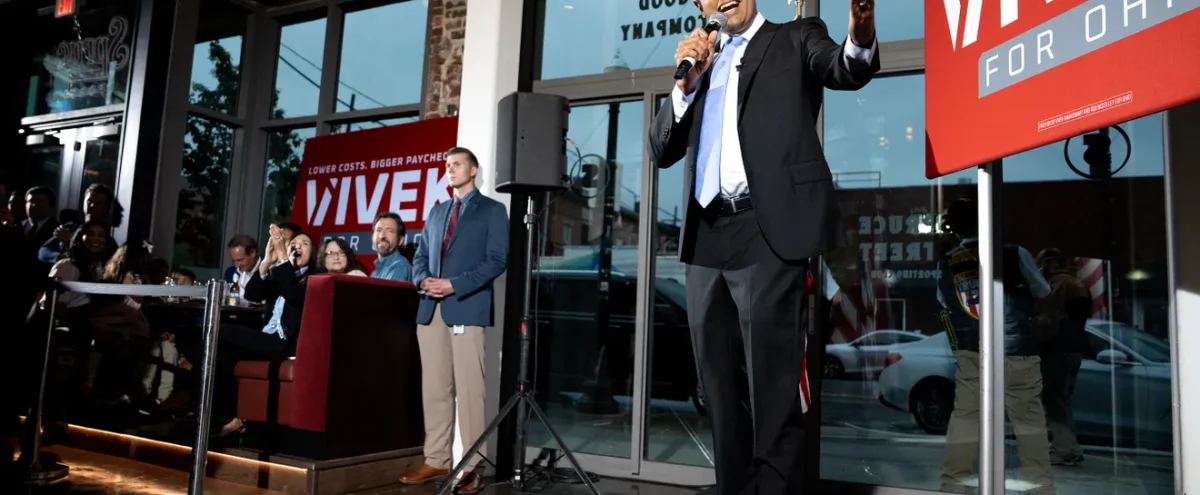
Vivek Ramaswamy easily secured the Republican nomination after defeating conservative YouTuber Casey Putsch. Ramaswamy entered the race with strong national visibility and immediate institutional support, leaving little room for serious opposition.
“The real destination is in November,” Ramaswamy told supporters during his victory speech in Columbus.
Meanwhile, incumbent Republican U.S. Senator Jon Husted faced no primary opposition at all.
The message from Ohio Republicans appeared clear: party leadership prioritized unity and efficiency over internal competition.
Sherrod Brown Still Dominates Ohio Democrats
On the Democratic side, Sherrod Brown proved he remains one of the most powerful figures in Ohio politics.
Brown quickly secured the Democratic nomination for his former Senate seat by defeating Columbus-area software designer Ron Kincaid. More importantly, his early entry into the race discouraged several high-profile Democrats from running at all.
Potential candidates like former Congressman Tim Ryan ultimately stayed out, largely because Brown continued commanding strong loyalty within the Democratic base.
Rather than fading quietly after leaving office, Brown demonstrated he still controls enormous political influence throughout Ohio.
Amy Acton Emerges as Democratic Governor Candidate
While much of the Democratic field waited on Brown’s decision-making, one major figure moved aggressively into the governor’s race.
Amy Acton launched her campaign only weeks after the 2024 election cycle ended, giving her a major head start in building support statewide.
That early move allowed Acton to establish herself as the Democratic frontrunner for governor long before other major candidates could organize campaigns.
Now she faces a direct ideological battle with Vivek Ramaswamy heading into November.
The contrast between the two candidates is expected to become one of the defining storylines of the general election.
Local Voters Push Back Against Seat Swapping
While statewide officeholders successfully rotated into new positions, similar strategies failed badly at the local level.
In Delaware County, voters rejected coordinated seat-swapping attempts by lawmakers trying to navigate around term limits.
Andrew Brenner lost his House race to Shawn Stevens.
Beth Lear was defeated in her Senate campaign by Ryan Rivers.
The results suggest voters may tolerate political maneuvering differently depending on the office involved.
At the statewide level, establishment coordination often succeeds because of fundraising advantages and name recognition. Locally, however, voters appeared less willing to reward candidates viewed as simply shifting seats to remain in power.
Ohio Supreme Court Race Could Become Major Battleground
Another important storyline emerging from the primary involves the Ohio Supreme Court.
Republicans are aggressively targeting Democrat Jennifer Brunner, currently the only Democrat holding statewide office in Ohio.
Colleen O’Donnell currently leads the Republican field seeking the opportunity to challenge Brunner later this year.
That race could carry enormous implications for the future ideological direction of Ohio’s highest court.
Quiet Primary Could Lead to Loud General Election
The calm nature of the primary season may actually increase the intensity of the general election.
Because both parties avoided prolonged internal battles, candidates can now focus entirely on attacking opponents and mobilizing voters statewide.
Republicans enter November hoping to complete a near-total sweep of Ohio’s statewide executive and judicial offices.
Democrats believe candidates like Sherrod Brown and Amy Acton can energize voters looking for an alternative direction.
The ideological divide between the parties has rarely been clearer.
Final Notes
The 2026 Ohio primary election may have lacked drama, but that quiet atmosphere was largely intentional. Party establishments successfully shaped the races early, protected favored candidates, and minimized internal chaos.
Now the real political fight begins.
With major statewide offices, judicial seats, and control of Ohio’s political direction all on the line, November is expected to deliver the volatility and intensity that many thought the primary season would provide.
The question now becomes whether Ohio voters will continue rewarding carefully managed political establishments — or whether the general election opens the door for something less predictable.
Add comment